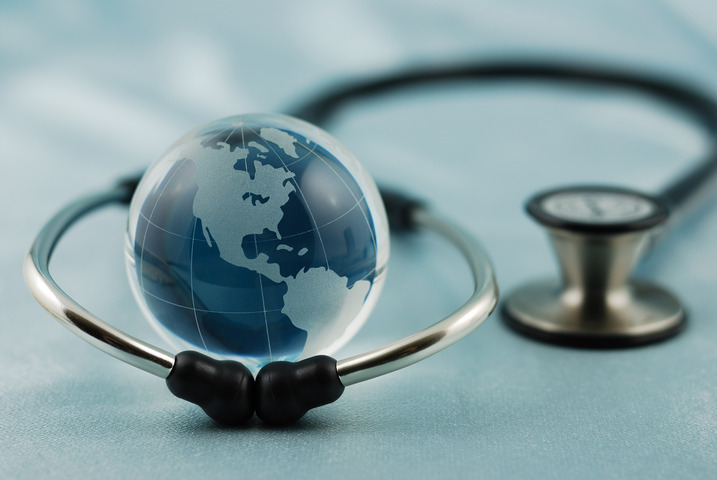
International Health Day: antibiotics under the spotlight
As healthcare professionals, we welcome the international recognition Spain has received, but we also warn that the real challenge lies in improving public health education.
As Víctor M. Chávez-Jacobo, Jessica Nava-Galeana and Víctor H. Bustamante explain in an article published in UNAM Global (February 2025), antibiotics are essential medicines that have enabled the development of modern medicine. However, their excessive use in livestock as growth promoters has triggered a silent crisis: the selection of resistant bacteria.
The authors highlight an alarming fact: the amount of antibiotics used in animals is far greater than that used in human medicine. Even more concerning, most of the antibiotics used in livestock are the same ones used to treat humans.
Antibiotic resistance (AR) is defined by these researchers as “the ability of bacteria to evade the action of these drugs.” The consequences are devastating: in 2019 alone, 1.27 million deaths were directly attributed to infections caused by resistant bacteria.
The World Health Organization (WHO) considers this threat one of the greatest facing humanity and has developed a global action plan that explicitly recommends ending the use of antibiotics to promote animal growth.
A decade ago, Spain was the EU country with the highest consumption of colistin (a last‑resort antibiotic) in the pork sector. This was alarming, as the UNAM researchers clearly document: “the constant administration of low doses of antibiotics to animals promotes the selection of resistant bacteria.”
In response, the “Reduce” program was launched: a voluntary agreement to reduce colistin use in the pork industry—an innovative public‑private initiative that changed the rules of the game.
The program adopted a positive approach: instead of penalizing non‑compliance, it publicly recognized farmers committed to responsible use, awarding them a quality seal that improved their market position.
The results were remarkable:
- In just two years, more than 90% of the Spanish pork sector joined voluntarily
- Colistin use was reduced by nearly 100%
- Between 2014 and 2022, overall antibiotic consumption in animals dropped by 70%
The key was regular communication between the public and private sectors to develop a joint strategy, and the motivational effect of public recognition—far more effective than punitive measures.
The opposite reality: What happens in medical consultations
This success contrasts sharply with what family doctors and pediatricians experience daily. We routinely see patients requesting antibiotics for viral infections, convinced that “something must be taken.”
“I’ve had a runny nose and cough for three days. I need an antibiotic or it won’t go away.” “My child had a fever last night. Aren’t you going to prescribe anything? Last year amoxicillin worked right away.” “I know it’s viral, but since I’m traveling, give me something just in case.”
These situations are not isolated anecdotes. They reflect a deep misunderstanding of when antibiotics are appropriate—and when they are not.
When are antibiotics appropriate? (And when are they NOT)
Antibiotics are NOT indicated (in the vast majority of cases) for:
- Common colds (caused by rhinovirus, coronavirus, adenovirus…)
- Influenza
- Most sore throats (80–90% are viral)
- Acute bronchitis (usually viral)
- Acute rhinosinusitis (mostly viral)
- Mild otitis media (many resolve spontaneously)
Antibiotics MAY be indicated (always under medical judgment) for:
- Streptococcal pharyngitis (confirmed by rapid test or culture)
- Bacterial pneumonia (confirmed by X‑ray and clinical signs)
- Urinary tract infection (confirmed by urine culture)
- Certain bacterial sinusitis cases (with specific duration and severity criteria)
The big misunderstanding: Viruses, bacteria and “superinfection”
One of the most common misconceptions is believing that antibiotics “prevent” complications. Nothing could be further from the truth.
What actually happens?
When a virus (such as influenza or the common cold) infects the respiratory tract, it causes inflammation and damages the mucosa. This can create a “fertile ground” for bacteria that normally live harmlessly with us (like Streptococcus pneumoniae or Haemophilus influenzae) to invade the damaged tissues.
This is called bacterial superinfection: the virus “opens the door,” and the bacteria “walk in.”
Why don’t we prescribe antibiotics “just in case”?
- Because 99% of colds and flu DO NOT develop bacterial superinfection
- Because unnecessary antibiotics kill our protective microbiota
- Because they increase selective pressure and drive resistance
- Because they expose patients to unnecessary side effects
As the UNAM authors emphasize, controlling antibiotic resistance “requires actions based on the One Health approach, which establishes that human, animal and environmental health are closely interconnected and must be considered as one.”
Using antibiotics as growth promoters fosters the proliferation of resistant bacteria in animals, which can be transmitted to humans through:
- Direct contact
- Consumption of contaminated food
- Animal waste entering the environment
This increases the risk of infections caused by pathogenic bacteria that are difficult—or impossible—to treat with available antibiotics, posing a serious threat to public health.
For patients and families:
- Understand that antibiotics are not “anti‑inflammatories” or “fever reducers”: they do not lower fever or relieve pain. Paracetamol or ibuprofen do.
- Respect viral timelines: a cold lasts 7–10 days; flu fever can last 3–5 days. This is normal.
- Do not demand antibiotics: if your doctor does not prescribe them, trust their judgment.
- Complete the course if prescribed: if antibiotics are necessary, follow the full treatment even if symptoms improve early.
For healthcare professionals:
- Dedicate time to patient education, even briefly
- Use rapid diagnostic tools (strep tests, PCR) to differentiate viruses from bacteria
- Offer symptomatic treatment plans as alternatives for patients who “need something”
Spain being praised in Lyon for its fight against antimicrobial resistance in the veterinary sector is a source of national pride. It shows that when there is political will, cross‑sector collaboration and smart strategies (based on positive incentives rather than punishment), deep change is possible.
On this International Health Day, under the conceptual umbrella of One Health, let us remember that human, animal and environmental health are inseparable. What happens on a pig farm affects what happens in a primary care clinic. And what happens in that clinic depends largely on what the population has learned about when—and when not—to use antibiotics.
Let us use them with the responsibility they deserve.
Dr. Sara Cordero Boto